
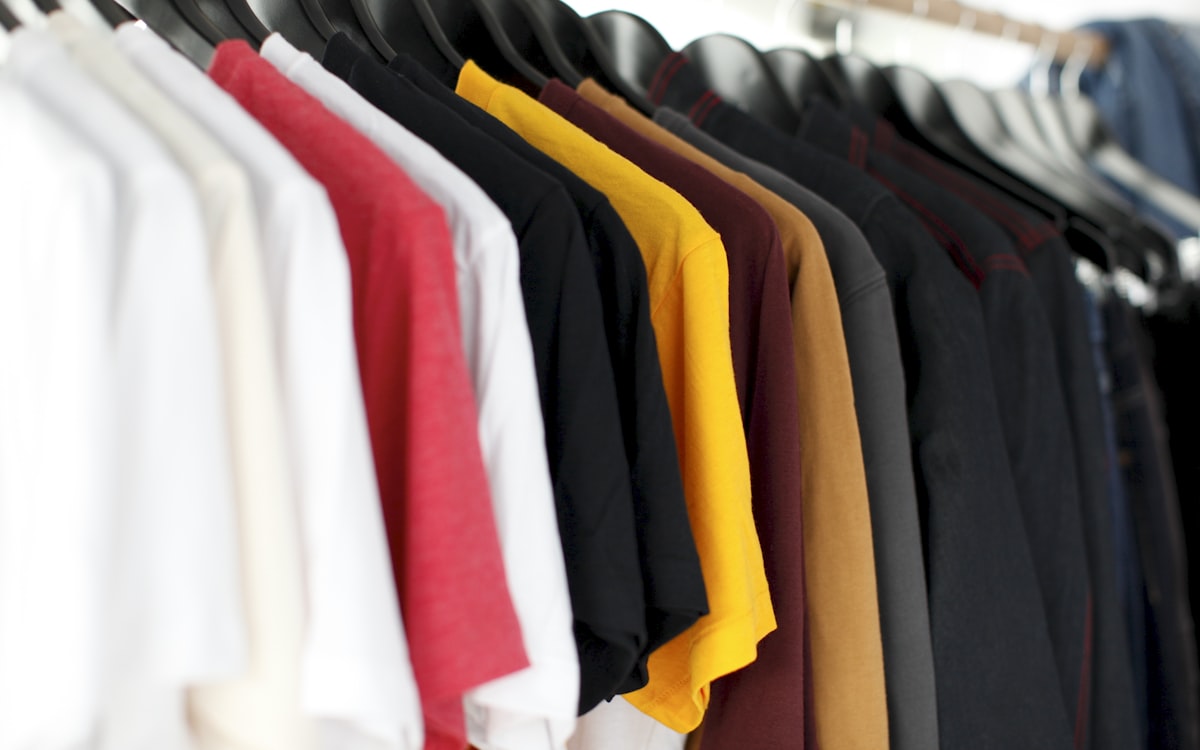
Four synthetic fibres cover most clothing
The composition tag inside a garment is legally required in the US (16 CFR Part 303) and the EU (Regulation 1007/2011). The tag lists the constituent fibres in descending order by weight, expressed as a percentage. Four synthetic fibres appear more often than the rest combined.
| Fibre | Also known as | Best trait | Common weakness |
|---|---|---|---|
| Polyester | PET fibre, Dacron | Wrinkle resistance, colour retention | Traps odour, sleeps hot |
| Nylon | Polyamide, PA6, PA66 | High abrasion strength, elastic recovery | Yellows under UV, absorbs moisture |
| Acrylic | Polyacrylonitrile | Wool-like feel, resists moths | Pills, holds static |
| Elastane | Spandex, Lycra | Stretch up to 500%, recovery | Degrades from chlorine and heat |
Reading the blend ratio without illusion
A 95% cotton 5% elastane label describes a stretchy cotton shirt where a small amount of elastane in every fibre gives the whole garment recovery. Elastane rarely exceeds 5% by weight because that percentage produces enough stretch for most garments. Above 10% the fabric behaves closer to activewear.
Polyester and cotton blends are common. A tag reading 65% polyester 35% cotton describes a fabric that is durable and wrinkle-resistant but does not breathe as well as pure cotton. Reversed to 65% cotton 35% polyester, the same shirt feels closer to cotton and wrinkles more, but sits cooler on skin. Polyester and viscose blends produce a drapey, silk-like hand at moderate cost, common in dresses and blouses. The drape comes from the polyester; the surface hand comes from the viscose.
What each fibre does under wear and washing
- Polyester: sheds microfibres in every wash cycle. High spin speeds and long cycles increase shedding. A fabric filter bag captures a portion of the released fibres before they reach the drain.
- Nylon: retains oils from skin and antiperspirants, which cause yellowing at underarms over time. Vinegar rinses can partially remove these residues; bleach cannot.
- Acrylic: pills faster than most fibres because the yarn is often short-staple. Hand-washing and turning garments inside out extends the visual life of acrylic knits.
- Elastane: loses recovery above 40°C wash temperature and in tumble dryers. Chlorine bleach breaks the elastane chains rapidly. This is why competitive swim briefs typically last only 6 to 12 months in chlorinated pools.
Reading the care label alongside the composition
- Look at the wash temperature symbol. A tub with 30 inside means maximum 30°C. Blends with elastane usually cap here.
- Check the dryer symbol. A circle in a square with a solid centre means do not tumble dry, common on garments with over 20% elastane or acrylic.
- Read the iron symbol. Polyester tolerates a single dot; nylon needs a single dot with steam only; acrylic often shows no iron symbol at all because heat melts the surface fibres.
- Check for the wringing symbol. A twisted rectangle crossed out warns against wringing, since polyester and nylon knits deform permanently.
- Note the chlorine bleach symbol, usually a triangle crossed out on synthetic garments. Chlorine damages elastane and yellows nylon.
Warning signs a synthetic garment is done
- Loss of stretch recovery, so the garment no longer springs back to shape after wear. Elastane has usually degraded.
- A shiny, plasticised appearance on the inside of the fabric. Repeated heat exposure has begun to melt the surface fibres.
- Broken or pulled elastic at waistbands and cuffs, visible as small loose loops on the interior side.
- Persistent odour that does not respond to laundering, from bacterial colonies bonded to the fibre surface.
- Yellowing that is confined to underarms and does not lift with washing, on white nylon garments particularly.
The Wikipedia entry on polyester covers the polymer chemistry that governs shrinkage, dye affinity, and heat tolerance. Related material guides include cotton bedding thread count, bamboo fabric labels, and wool and wool blends.
Moisture regain and why some synthetics feel clammy
Moisture regain is the mass of water a conditioned fibre absorbs at 65% relative humidity and 20°C, expressed as a percentage of its dry weight. It is the single most useful number for predicting how a garment will feel on skin during exercise or in humid weather. Standard test method ASTM D2495 defines the conditioning procedure.
| Fibre | Moisture regain | Feels clammy above ambient humidity of | Recycling identifier |
|---|---|---|---|
| Wool | 13-18% | Rarely; buffers moisture in the fibre | Not marked, natural fibre |
| Cotton | 7-8% | Above 80% RH once fully wet | Not marked, natural fibre |
| Nylon (PA6, PA66) | 3.5-4.5% | Above 70% RH during exertion | Resin code 7 (other) |
| Acrylic | 1-2% | Above 60% RH | Resin code 7 (other) |
| Elastane | 0.5-1.3% | Immediately with sweat | Resin code 7 (other) |
| Polyester (PET) | 0.2-0.4% | Immediately with sweat | Resin code 1 (PET) |
Polyester’s near-zero moisture regain is the reason plain polyester T-shirts feel clammy during exercise. The fibre cannot absorb perspiration into its structure, so sweat sits on the skin side of the fabric until it evaporates or wicks laterally along the yarn to a dry area. Modern performance polyester compensates with mechanical wicking: multi-lobal cross-section fibres or bicomponent constructions pull moisture along channels between fibres by capillary action. The regain number does not change, but the fabric moves water fast enough that skin dries quickly.
Polyester also earns the resin identification code 1 (PET), the same code applied to plastic bottles. This is one reason recycled polyester (rPET) has become widespread in activewear and outerwear since the mid 2010s. A typical performance jacket labelled 100% recycled polyester uses fibre spun from post-consumer PET bottle flakes at yields of around 25 to 30 bottles per 100 grams of fabric. rPET saves roughly 30% to 50% of the energy required for virgin polyester production according to industry lifecycle assessments, but the finished garment sheds microfibres at the same rate as virgin polyester in every wash cycle.
Nylon carries resin code 7 (other) because it is a distinct polymer family. Recycled nylon (rPA) is produced from post-consumer fishing nets and industrial carpet waste and is common in swimwear and technical outerwear, though supply remains a small fraction of the recycled polyester market. Acrylic and elastane are chemically difficult to recycle at scale, so an elastane-blend garment marketed as recycled almost always refers to the polyester or nylon component only. A tag reading 88% recycled polyester and 12% elastane describes a garment where the elastane is virgin material and only the majority fibre is post-consumer, which is a legitimate use of the recycled claim under the ISO 14021 environmental labelling standard.
Frequently asked questions
How can I tell premium synthetic fabrics from cheaper alternatives at a glance?
Look at the documentation more than the packaging. Brands that publish material grades, production methods, and care instructions usually have less to hide.
Does higher price always mean longer life with synthetic fabrics?
Not always. Price tends to track production care up to the mid-market, then brand premium begins to play a larger role. Reading the spec sheet matters more than reading the price tag.
What is the most common mistake when buying synthetic fabrics?
Assuming the label means the same thing across brands. The category words rarely have a single technical definition, so two products marked the same may behave very differently.