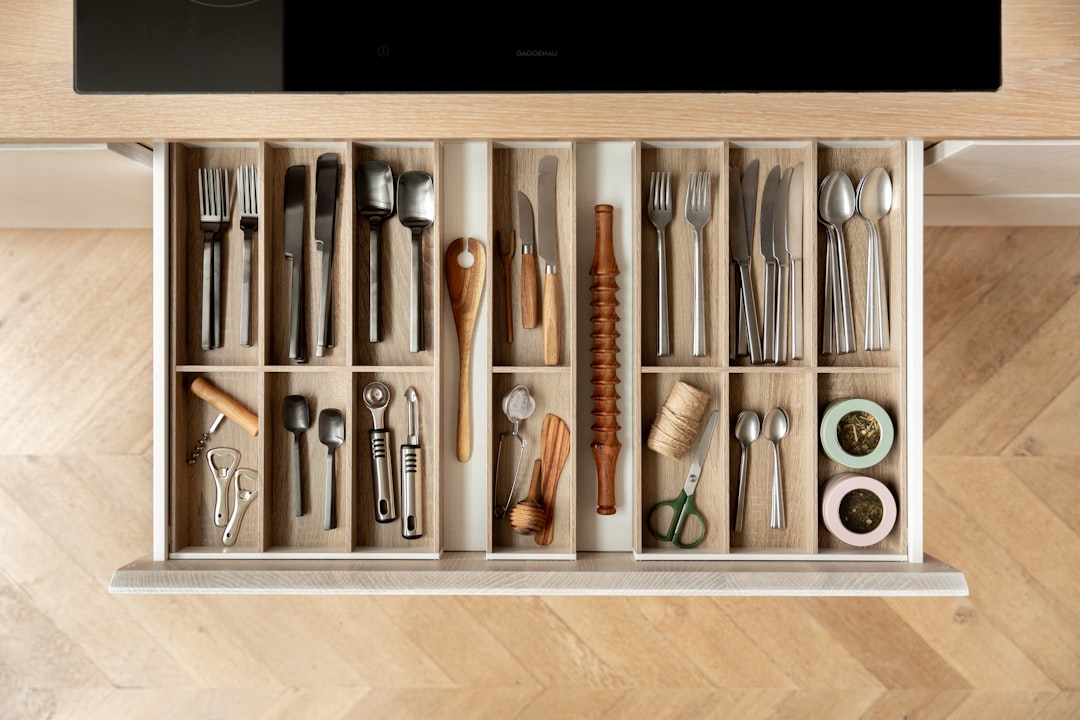
Almost every household has a drawer or a shelf where kitchen gadgets go to be forgotten. The avocado slicer, the egg separator, the strawberry huller, the electric jar opener. Each one felt sensible at the checkout and useless by the second week.
The single task problem in a modern kitchen
A knife handles roughly forty tasks well enough that a home cook rarely reaches for anything else. A gadget designed for one task has to earn its place against the knife every time it is used. Most fail that test within a fortnight. An avocado slicer sits in a drawer while a paring knife handles the same job in less time, with less to wash, and with no third item to store.
The exception is the gadget that removes a real inconvenience the knife cannot solve. A garlic press is one such example, since crushing garlic finely by knife is fiddly for many home cooks. A citrus zester is another. The rest, if honest, are novelty objects sold on the strength of a two minute video that shows the tool at its best moment. Watch the same video twice and the tool looks less magical the second time, since the eye picks up on the perfectly ripe fruit, the perfectly straight cucumber, and the perfectly clean cutting board that no home kitchen actually offers.
Storage cost as the silent tax on novelty
For a wider view on this thread, see the Quiet Mistake of Buying the Most Expensive Option to Avoid Research.
A kitchen has finite drawer space. Every new gadget displaces something that already earns its keep. The cost of the gadget is not just its price. It is also the extra time spent digging past it to reach the peeler, the extra rinse when it falls out of the drawer, and the eventual removal to a cardboard box in the garage.
In a typical urban kitchen with two working cooks, the useful set of tools numbers about twenty items. A chef knife, a paring knife, a bread knife, a peeler, a grater, a pair of tongs, a wooden spoon, a spatula, a whisk, a fine mesh strainer, and a small stack of measuring tools cover most weeknight cooking. Everything past that list has to earn a spot by displacing something on it.
Why a demo video does not predict real use
A gadget demo is a controlled scene. The onion is a specific size. The strawberry is picked for the perfect stem angle. The camera shows the fastest run through the tool. Real cooking is variable. An onion is slightly too large. A strawberry is slightly overripe. The gadget slips, jams, or squashes the fruit. The user gives up after two attempts and reaches for the knife.
Gadgets that survive this test tend to have a wide tolerance for input. A pair of kitchen shears handles chicken thigh trimming, herb chopping, bacon dicing, and packet opening. A pizza cutter that cost half as much handles a single task and fails the moment the pizza is too thick.
The habit that decides whether a tool stays
A related pattern is discussed in the Mistake of Trusting Star Ratings Without Reading the Reviews.
A new tool is used if it is picked up in the first three sessions after purchase. If it stays in the drawer for a week, it will usually stay there permanently. The reason is simple. The cook has already solved the problem another way and formed a habit around the older solution. Breaking that habit takes deliberate practice, and few gadgets are important enough to justify the effort.
| Gadget category | Odds of second use within a month | Common reason for abandonment |
|---|---|---|
| Single fruit slicer | Low | Fruit size variability |
| Electric can or jar opener | Low to moderate | Manual tool works faster in practice |
| Herb stripping tool | Very low | Fingers strip herbs faster |
| Garlic press | High | Solves a real knife inconvenience |
| Kitchen shears | Very high | Multi task versatility |
| Digital instant read thermometer | High | Solves a food safety problem |
What ends up quietly filling the back cupboard
The same logic applies to the choices covered in buying for a Life You Do Not Live Yet.
A survey of home cook forums shows the same three categories dominating the abandoned pile. Small electric appliances that promised to do one thing well, such as quesadilla makers, panini presses that were never used after the second sandwich, and hot dog rollers. Speciality gadgets tied to a single ingredient, from the strawberry huller to the pineapple corer. Novelty measuring devices, including the digital tablespoon and the app connected scale that stopped working when the maker shut down the service.
All three share a trait. They demand a specific context to be worthwhile and that context arises rarely. A quesadilla maker only earns its shelf when quesadillas are cooked twice a week. Fewer than five percent of households meet that bar.
Small habits that reduce the pile
Owners tracking a similar decision often find why Cheap Backup Tools Often Cost More Than One Good Tool useful.
- Delay the purchase by a week and ask whether the problem still feels real on day seven. Most impulses fade before the week ends.
- Compare against a good knife and a wooden board before buying. If the knife handles the task in one extra minute, the gadget is usually not worth its drawer space.
- Check the return window on the retailer site before ordering. A generous return policy is a good excuse to test a gadget for a fortnight before committing.
- Give yourself permission to discard a gadget that failed the honest test at three months. Holding on out of guilt keeps the drawer full and does not recover the cost.
The category worth being generous with
Two exceptions deserve mention. Digital instant read thermometers earn their price by preventing overcooked chicken and underdone pork on the same night. A good one costs twenty dollars and lasts a decade. The second is a small kitchen scale. According to the broad category of kitchen utensils and tools, weighing ingredients is standard practice in professional kitchens and reduces both variability and waste at home. A five kilogram scale with tare function costs less than most single task gadgets and improves the outcome of nearly every baking session.
Frequently asked questions
Are single purpose gadgets ever worth buying?
A few earn their place by solving a task a knife or a spoon cannot. A digital thermometer, a kitchen scale, and a pair of shears fall in that group for most home cooks. Most others do not.
How can I stop buying gadgets I will not use?
Wait a week after seeing a tempting product. Look at your existing tools and ask whether the new item removes a real friction. If the answer is not obvious, skip it.
What should I do with the pile of unused gadgets I already have?
Sort into three groups. Items that would sell for more than ten dollars go to a resale site. Items in good shape go to a charity kitchen. The rest go to the recycling stream if the material allows.