What you will learn
- What ends the working life of most speakers
- Habits that quietly add years
- Habits that quietly take them away
- Signals of a speakers built for the long run
- When repair makes sense and when it does not
Daily habits that quietly add years
Owners who get the longest life from their speakers share a small set of habits. None of them is dramatic. The pattern is consistency, not effort.
Daily habits that quietly take years away
The opposite is also true. Certain habits shorten the life of speakers in ways most owners do not notice until the damage is done.
Driver and crossover components that decide life
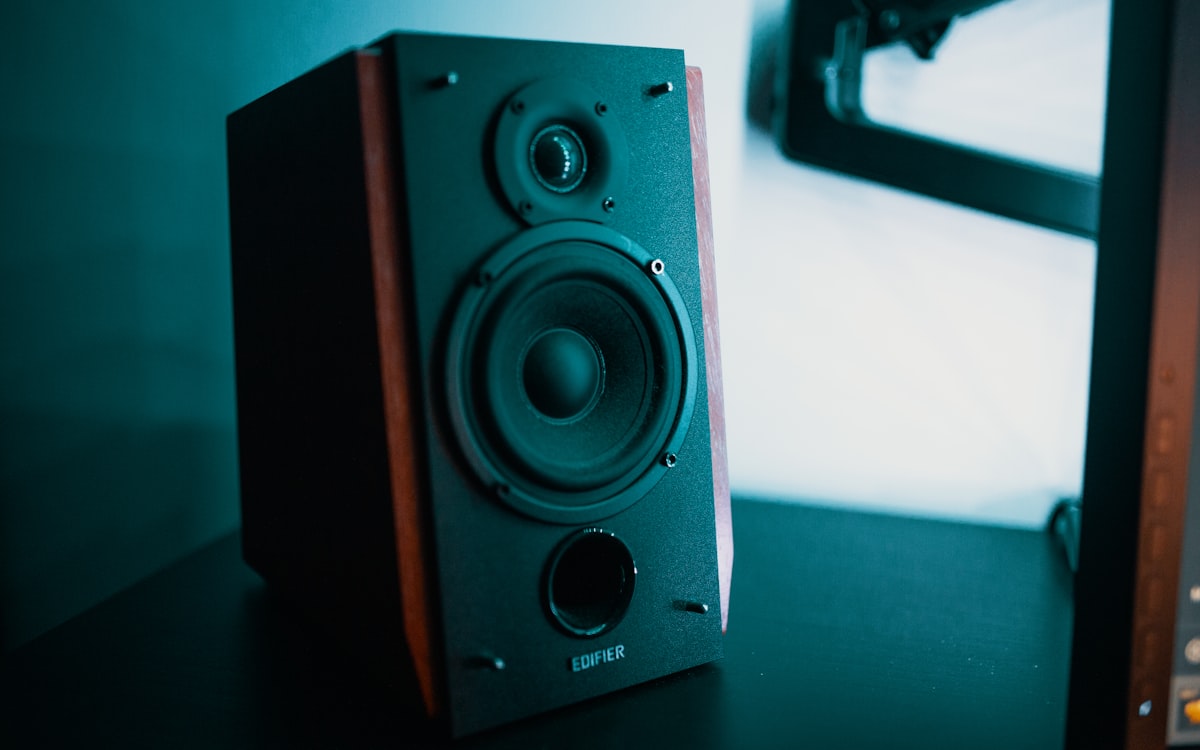
A speaker cabinet is essentially wood veneer over MDF, a set of drivers, and a passive crossover network. Each of those three elements ages on its own clock. The tweeter is usually the longest lived driver, often outlasting the enclosure and the amplifier. Silk dome tweeters routinely survive 50 years or more. Metal dome units are similar. The mid woofer or bass driver is where failure typically begins, and the specific failure depends on the surround material. Foam surrounds, common on drivers from the late 1970s through the 1990s, disintegrate after 10 to 15 years due to ozone and ultraviolet exposure. Rubber surrounds, standard since the mid 1990s in premium speakers, last 30 to 50 years.
The passive crossover, the network of capacitors and inductors that splits the signal between drivers, ages more quietly. Electrolytic capacitors drift in value after 20 to 30 years. Film capacitors and metallised polypropylene units drift much more slowly and often outlast the cabinet. Speakers built with film capacitors in the crossover routinely play at reference quality after 40 years. Speakers built with cheap electrolytics can sound audibly duller by year 15.
Signs of impending speaker failure
- A buzz or rattle at low frequencies that appears with certain notes. Usually a loose driver mounting screw or an aged surround.
- A raspy edge on high notes that was not there when new. Voice coil rubbing in the gap, often from a bumped driver.
- Reduced bass output that comes on gradually. Foam surround loss of compliance, a slow leak in the enclosure, or a drying out of the port foam.
- Hissing or intermittent silence in one channel. Usually the amplifier or the source, but on active speakers can be a failed amplifier module.
- Dust caps that are visibly indented. A previous cone strike, cosmetic more than functional but worth noting.
The refoam and refurbishment economics
Refoaming a pair of drivers with disintegrated foam surrounds costs 60 to 150 dollars per driver at a specialist. A pair of vintage speakers from a respected maker, refoamed, often plays at original specification for another 20 years. Refurbishing the crossover with modern film capacitors adds 150 to 300 dollars per cabinet and typically improves the sound above the original.
Cabinet refinishing is cosmetic but can add significant enjoyment. A veneered enclosure that has warped or bubbled from moisture is beyond simple refinishing, but a plain scratch on an otherwise sound cabinet responds well to careful touch up. The economics favour refurbishment strongly on premium speakers where a new comparable pair costs 3,000 dollars or more, and less clearly on budget speakers where a new modern equivalent is available for 300. A useful rule of thumb is that any speaker retailing new above 1,500 dollars per pair is almost always worth refoaming and recapping when the drivers or crossover show their age, and a pair below 500 dollars usually is not.
Two adjacent components shape the long term listening experience even though they sit outside the speaker cabinet. First is the amplifier. Passive speakers matched to an amplifier with excess headroom, meaning at least 50 percent more continuous power than the speaker rated sensitivity requires, run their drivers within safe excursion limits and last significantly longer. Underpowered amps clip more often, and a clipped signal delivers direct current to the tweeter, which is the classic cause of a blown high frequency driver. Second is the speaker cable. A quality twisted pair copper cable outlasts thin bell wire by decades and never becomes the weak link in the chain. Neither of these adds cost above what a careful shopper would spend anyway, but both extend speaker life by a decade or more.
According to the physical principles that govern a loudspeaker driver, the design fundamentals have not changed in 50 years and older high quality speakers, when serviced, compete well with modern equivalents. For related lifespan pieces, see the furniture joinery piece, the parts availability picture, and the cordless tool battery analysis.
Surround material and expected years to failure
The suspension around a speaker driver, called the surround, is the single largest determinant of driver lifespan. A driver in a well built cabinet often outlives its owner if the surround is stable, but can age out in a decade if the surround chemistry is wrong. Three materials dominate the market, and they age along strikingly different curves.
Foam surrounds became common in the 1970s for their long excursion and low cost. Their weakness is oxidation. In humid climates or rooms with ozone from copiers or air purifiers, foam surrounds crumble in 8 to 15 years. In a dry cool room the same surround might last 20 years. The failure mode is unmistakable: the surround flakes off in yellow crumbs when touched.
Rubber surrounds, usually butyl or a similar synthetic, resist ozone and UV far better. Expected life sits at 25 to 40 years. Failure shows up as reduced bass output long before the driver stops working entirely, because the rubber stiffens rather than crumbles.
Cloth or accordion pleated fabric surrounds, often treated with a damping compound, are the most durable of the three. Vintage speakers from the 1960s with cloth surrounds routinely reach 50 years of service and still measure to specification.
- Foam: 8 to 15 years, refoam cost roughly 40 to 90 dollars per driver
- Rubber: 25 to 40 years, replacement cost 80 to 200 dollars per driver
- Cloth or pleated fabric: 40 to 70 years, rarely replaced
Checking a used pair is straightforward. Press gently on the cone edge with a fingertip. Foam that has softened enough to dent will not last another year. Rubber that has hardened past the feel of a car tyre is close to end of life, though the speaker often plays for a few more years at reduced fidelity.
Frequently asked questions
How can I tell if a speakers will last more than ten years?
Look at three signals together. The reputation of the model in long term owner forums, the availability of spare parts, and the materials used in the parts that wear most. Any one of these alone is incomplete, but together they paint a useful picture.
Are extended warranties worth it for speakers?
Sometimes. Extended warranties make most sense for products with complex electronics and rare parts. They make less sense for simple mechanical products that are easy and cheap to repair.
When does it become worth repairing a speakers?
When the repair cost is less than half the price of a comparable new model, the repair is usually the calmer choice. Above that threshold, the math depends on how long you would have kept the new model anyway.